For children with autism, the world can feel overwhelming. Music can slow things down, create predictability, and make learning feel safe.
Research shows that music-based interventions can support emotional regulation and engagement in children with autism by providing structured, predictable auditory input (Geretsegger et al., 2014; Sharda et al., 2018).
I remember a child who struggled with anxiety during ABA therapy sessions until we introduced soft background music. Over time, focus improved, behaviors decreased, and learning became smoother.
Clinical studies have similarly observed reductions in anxiety and improvements in task engagement when music is incorporated into therapeutic settings (LaGasse, 2014).
Why music connects so well with autistic children
Many autistic children respond strongly to rhythm, melody, and repetition. Music engages multiple parts of the brain at once, which can make learning feel easier and less stressful.
Neuroscience research suggests that music activates widespread neural networks involved in emotion, movement, attention, and auditory processing, which may enhance learning in autistic individuals (Sharda et al., 2018).
Unlike verbal instructions, music doesn’t rely only on words. That’s especially helpful for children who struggle with language or social communication.
Studies indicate that music can serve as an alternative communication pathway, supporting children with limited verbal skills by engaging nonverbal processing systems (Geretsegger et al., 2014).
Emotional and sensory benefits of music
Music can help children regulate emotions and manage sensory input. Calming sounds may reduce anxiety, while upbeat music can boost energy and motivation.
Evidence shows that music therapy can significantly reduce stress behaviors and improve emotional responsiveness in children with autism (American Music Therapy Association, 2012; Thompson et al., 2014).
Some key emotional benefits include:
- Helping children express feelings without words
- Reducing stress and emotional or sensory overload
- Creating predictable patterns that feel comforting
- Improving mood and attention
These outcomes are supported by research demonstrating improvements in emotional expression and attention span during music-based interventions (Sharda et al., 2018).
For children who feel overwhelmed easily, music can be grounding and soothing.
How music supports communication and social skills
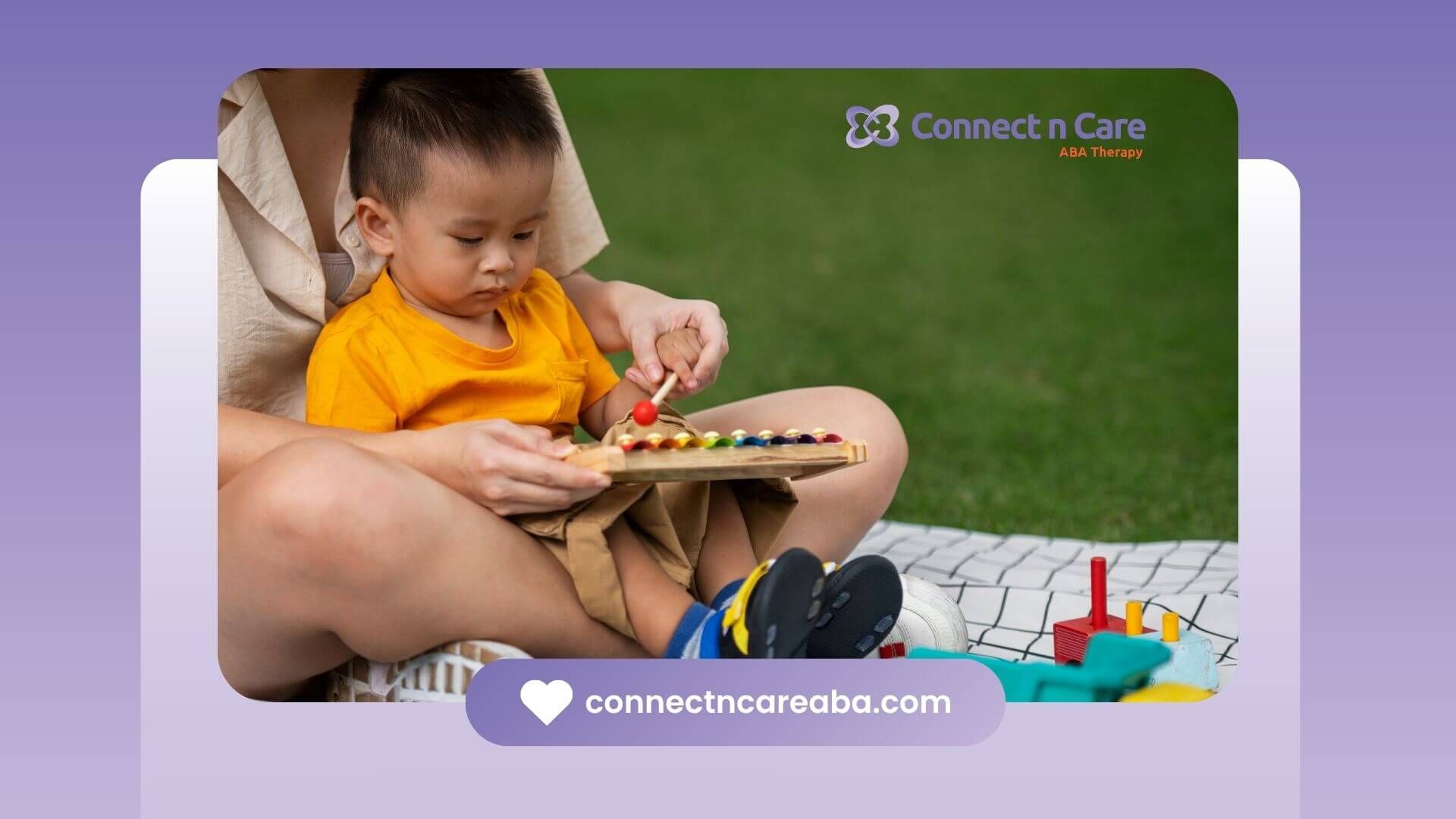
Music naturally encourages interaction. Singing, clapping, and taking turns with instruments help children practice social skills in a fun, low-pressure way.
Music can support:
- Speech and language development
- Imitation and joint attention
- Turn-taking and listening skills
- Eye contact and shared engagement
Even simple songs can encourage children to participate and connect with others.
Music and learning through repetition
Repetition is a key part of learning for many autistic children—and music is full of it. Songs repeat words, rhythms, and movements, which helps reinforce new skills.
This makes music useful for teaching:
- Daily routines
- Transitions between activities
- Basic concepts like colors, numbers, or actions
Learning through music often feels less like work and more like play.
How music fits into ABA therapy
Music can be a great complement to ABA therapy. Therapists may use songs, rhythm, or musical games as reinforcement, motivation, or part of skill-building activities.
When paired with evidence-based autism therapy, music becomes more than entertainment—it becomes a learning tool.
Supporting your child with the right care
At Connect N Care ABA, we focus on helping children grow using strategies that fit their unique strengths and interests—including creative approaches like music when appropriate. Our ABA programs are personalized, supportive, and family-centered.
We proudly offer services across North Carolina and Virginia, including:
- ABA therapy at home for learning in a comfortable environment
- School-based ABA therapy to support success in the classroom
- Center-based ABA therapy in a structured, engaging setting
- ABA parent training to help families support progress every day
Ready to support your child’s development in a meaningful way?
Reach out to us today to learn how Connect N Care ABA can help your child thrive through personalized, compassionate care. We’re here for you—every step of the way.
FAQs
Can music improve communication in autistic children?
Yes. Singing and musical play can encourage speech, imitation, and joint attention, especially for children who struggle with verbal communication.
Does music help with sensory regulation?
Music can help regulate sensory input by providing predictable rhythms and calming sounds, which may reduce anxiety and emotional overload.
Is music therapy effective for autism?
Music therapy can be very effective when tailored to a child’s needs. It’s often used alongside evidence-based therapies like ABA for added support.
Can music be used at home to support learning?
Absolutely. Parents can use songs to teach routines, transitions, and basic concepts in a way that feels fun and familiar to their child.