For many parents, the first questions after an autism diagnosis are the hardest: What is ABA therapy? Will it actually help my child? What does a session even look like?
Applied Behavior Analysis is grounded in decades of research and remains one of the most effective, evidence-based interventions available for children with ASD. Knowing how it works, and where it's delivered, gives families the clarity they need to choose an approach that fits their child and their home life, and in places like Virginia, that increasingly means weighing home-based therapy against a more traditional clinic setting.
What is ABA Therapy?
ABA therapy is a scientific approach to understanding and improving behavior. It helps children with Autism Spectrum Disorder build skills like communication, social interaction, and independence, using individualized plans built around each child's strengths and needs. At its core, ABA uses the principles of learning theory, how behavior is influenced by what happens before and after it, to teach new skills and reduce behaviors that interfere with learning, safety, or independence.
A Simple Definition
In plain terms, ABA therapy looks at the relationship between a person's behavior and their environment. Therapists identify what triggers a behavior (the antecedent), the behavior itself, and what happens afterward (the consequence). By adjusting these elements, especially through positive reinforcement, ABA helps children build new skills like communication, social interaction, and self-care while reducing behaviors that may be harmful or disruptive.
A Brief History and Evidence Base
ABA has its roots in behavioral psychology research from the mid-20th century, but it became widely known as an autism intervention after Dr. O. Ivar Lovaas published influential studies in the 1980s. Since then, ABA has been refined into a more flexible, play-based, and individualized approach. Today it is supported by hundreds of peer-reviewed studies and is recognized as a leading evidence-based treatment for children with autism.
Who Provides ABA Therapy
ABA therapy is delivered by a team of trained professionals. A Board Certified Behavior Analyst (BCBA) designs and oversees each child's treatment plan, while a Registered Behavior Technician (RBT) works directly with the child to implement the plan during sessions. BCBAs hold a graduate degree and pass a national certification exam, while RBTs complete specialized training and supervised fieldwork before working with clients.
How Does ABA Therapy Work?
ABA therapy is not a single technique, it's a framework built around ongoing assessment, individualized goals, and consistent measurement of progress. Every child's plan looks different, but the underlying process follows the same general structure.
Assessment and Individualized Treatment Plans
Therapy begins with a comprehensive assessment, often called a Functional Behavior Assessment (FBA), where a BCBA observes the child, gathers input from parents and caregivers, and identifies specific goals. From there, the BCBA builds an individualized treatment plan that targets skills such as communication, social interaction, self-care, and academic readiness, along with any behaviors that need to be reduced.
Positive Reinforcement and Core Behavioral Principles
Positive reinforcement is central to ABA. When a child demonstrates a desired behavior or skill, they receive a meaningful reward, praise, a preferred activity, or another motivator, which increases the likelihood that the behavior will happen again. Over time, this reinforcement is gradually reduced as the skill becomes more natural and independent.
Common ABA Teaching Methods
ABA therapists use a variety of structured and naturalistic teaching methods depending on the child's needs. Discrete Trial Training (DTT) breaks skills into small, teachable steps practiced in a structured format. Natural Environment Teaching (NET) embeds learning into everyday play and routines. Other strategies, like modeling, prompting, and task analysis, help children build skills gradually and generalize them across settings.
Data Collection and Progress Monitoring
A defining feature of ABA is its reliance on data. RBTs track a child's responses during every session, and BCBAs review this data regularly to see what's working and what needs adjustment. This ongoing measurement allows treatment plans to evolve as the child grows, ensuring therapy stays aligned with real progress rather than guesswork.
What Does ABA Therapy Help With?
While every child's goals are unique, ABA therapy is commonly used to build skills and reduce behaviors across several core areas.
Communication and Language Skills
Many children begin ABA therapy to build functional communication, whether that means developing spoken language, using picture exchange systems, or learning to use an assistive communication device.
Social Skills
ABA helps children learn to initiate interactions, take turns, share attention, and understand social cues that support friendships and classroom participation.
Adaptive and Daily Living Skills
Skills like dressing, toileting, feeding, and following daily routines are frequently targeted, helping children build independence at home and in the community.
Reducing Challenging Behaviors
ABA also addresses behaviors that can interfere with learning or safety, such as aggression, self-injury, or elopement, by identifying their function and teaching more appropriate alternatives.
What is Home-Based ABA Therapy?
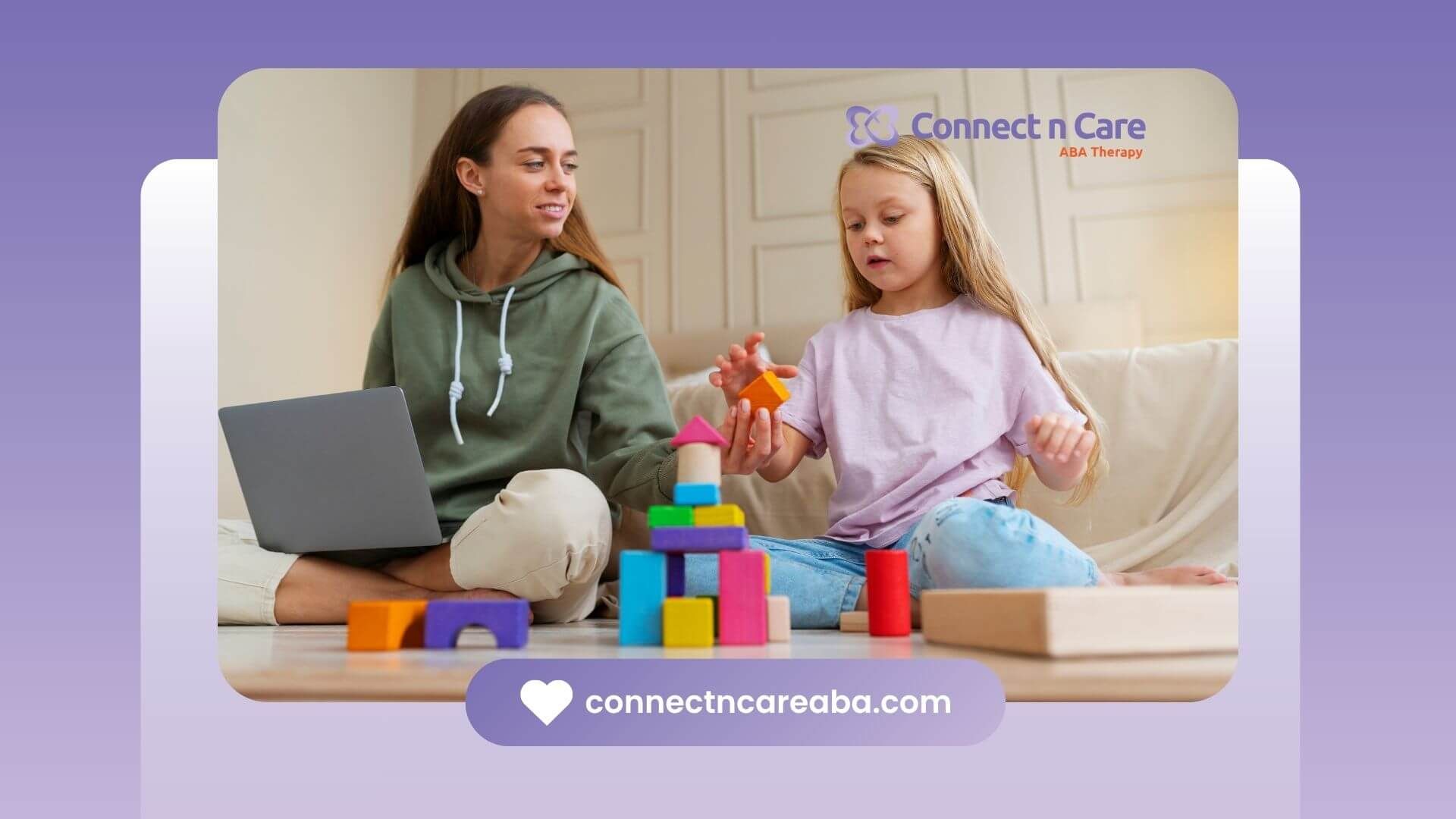
Home-based ABA therapy involves a Registered Behavior Technician working directly with a child in their home under the supervision of a Board Certified Behavior Analyst. Sessions are tailored to the child’s unique needs and often incorporate real-life situations, making learning more practical and relevant.
Key Features:
- Conducted in the child’s natural environment (home).
- Focuses on individualized goals.
- Parents and family members actively participate.
- Reinforces skills in everyday routines.
Why Virginia Families Choose Home-Based ABA Therapy
Families in Virginia often face logistical challenges such as commuting to clinics or balancing therapy with school schedules. Home-based therapy offers:
- Convenience: Eliminates travel time and scheduling conflicts.
- Comfort: Children feel safer and less anxious in familiar surroundings.
- Family Involvement: Parents can observe and reinforce strategies.
- Continuity of Care: Skills are practiced in real-life settings, improving generalization.
Effectiveness of Home-Based ABA Therapy
Research and clinical practice show that home-based ABA therapy can be highly effective. According to ABA Centers of Virginia, children often learn essential skills such as communication, toileting, dressing, and behavior management more successfully in familiar environments.
Case Study Example
In Richmond, Virginia, a 6-year-old child diagnosed with ASD began home-based ABA therapy focusing on communication and self-care. Within six months:
- The child improved expressive language by 40%.
- Toileting independence increased significantly.
- Parents reported reduced anxiety during daily routines.
This case highlights how
personalized, home-based interventions can accelerate progress.
Comparing Home-Based vs. Clinic-Based ABA Therapy
| Aspect | Home-Based ABA Therapy | Clinic-Based ABA Therapy |
|---|---|---|
| Environment | Familiar, comfortable | Structured, controlled |
| Family Involvement | High | Moderate |
| Skill Generalization | Strong (real-life settings) | May require transfer to home |
| Socialization Opportunities | Limited | Greater peer interaction |
| Flexibility | High | Moderate |
Both approaches are effective, but the choice depends on the child’s needs and family preferences.
Challenges of Home-Based ABA Therapy
While effective, home-based therapy has challenges:
- Limited peer interaction compared to clinic settings.
- Distractions at home may reduce focus.
- Space constraints for certain activities.
- Requires strong
parental commitment.
Role of Parents and Educators in Virginia
Parents and educators are critical partners in ABA therapy. In Virginia, many schools collaborate with ABA providers to ensure continuity between home and classroom. Parents reinforce strategies at home, while educators apply them in school settings, creating a holistic support system.
Professional Insights
Therapists in Virginia emphasize that home-based ABA therapy is most effective when:
- Sessions are consistent (10–20 hours per week).
- Parents actively participate.
- Goals are realistic and tailored.
- Collaboration exists between therapists, schools, and families.
Additional Case Study: Norfolk, VA
A family in Norfolk reported that their 8-year-old child, who struggled with transitions, benefited significantly from home-based ABA therapy. By practicing routines in the home environment:
- Morning transitions to school became smoother.
- The child demonstrated improved self-regulation.
- Teachers noticed fewer behavioral disruptions in class.
This underscores the generalization of skills from home to school settings.
Evidence-Based Outcomes
Studies consistently show that ABA therapy, whether home-based or clinic-based, improves:
- Communication skills
- Adaptive behaviors
- Academic readiness
- Social interaction
Home-based therapy adds the advantage of contextual learning, where skills are taught and reinforced in the same environment where they are needed.
Conclusion
Home-based ABA therapy in Virginia offers a highly effective, family-centered approach to supporting children with ASD. By leveraging the comfort of familiar environments, involving parents, and focusing on individualized goals, children often achieve faster progress in communication, self-care, and behavior management. While challenges exist, the benefits, especially convenience, comfort, and skill generalization, make home-based ABA therapy a powerful option for many families. For Virginia parents, educators, and professionals, the key lies in collaboration and consistency, ensuring that therapy translates into meaningful, everyday success.
Connect N Care ABA provides compassionate, evidence-based ABA therapy in Virginia, and North Carolina. Our team of BCBAs and RBTs partner with families to deliver personalized therapy in the comfort of your home.
Ready to explore home-based ABA therapy for your child? Contact us today!
Frequently Asked Questions
Is home-based ABA therapy as effective as clinic-based therapy?
Yes. Research shows that home-based ABA therapy can be equally effective, especially for skills that need to be generalized to everyday routines. While clinic-based therapy may offer more peer interaction, home-based therapy provides comfort, convenience, and strong family involvement, which often accelerates progress.
How many hours of home-based ABA therapy are recommended per week?
The recommended number of hours varies depending on the child’s needs, but most children benefit from 10–25 hours per week of consistent ABA therapy. In Virginia, many providers, including Connect N Care ABA, work with families to design schedules that balance therapy with school and family life.
What role do parents play in home-based ABA therapy?
Parents are essential partners in home-based ABA therapy. They observe sessions, reinforce strategies, and help ensure consistency across daily routines. Active parent involvement has been shown to significantly improve outcomes, as children practice skills in real-life settings with family support.
SOURCES:
https://my.clevelandclinic.org/health/articles/board-certified-behavior-analyst-bcba
https://www.bacb.com/
https://www.psychology.org/resources/bcba-meaning-career-overview/
https://www.thechicagoschool.edu/insight/career-development/bcba-guide-bcba-certification-exam/
https://onlinecounselingprograms.com/mental-health-careers/how-to-become-behavior-analyst-bcba/aba-certification-explained/